
Summary of the Exercise
Many of us carry quiet, unconscious assumptions about our emotions that deeply dictate how we navigate our daily lives and cope with stress. Often, these include beliefs about whether an emotion is "acceptable" (for example, thinking that experiencing or expressing negative feelings is a sign of weakness, which leads us to push them away) or whether an emotion is "malleable" (such as believing our feelings are fixed and completely out of our personal control).
Key Takeaways & Next Steps
Practice Self-Compassion
Give yourself plenty of grace and focus entirely on building a healthier mindset moving forward.
Repeat as Needed
It's incredibly beneficial to do this for each of the main feelings you struggle with, and even for positive emotions, to fully illuminate your core beliefs and how they shape your daily life.
Use the Example
If you find this reflection a bit tricky to conceptualize at first, feel free to refer to the helpful example provided in Step 3 to guide your personal reflection.

Meet the Coach
Paul Gagnon, ACC ICF Certified Coach | MYcoach. When you approach this exercise to uncover your unhelpful assumptions, please make a firm commitment to practice self-compassion rather than blame. Don't blame yourself or your family members for holding onto these limiting beliefs, as it is highly likely they were exposed to the exact same messages growing up. Give yourself and them plenty of grace, and remember that you can absolutely repeat this reflection numerous times for different emotional states to fully illuminate how these core beliefs shape your daily life. Treat this framework as an extension of our coaching—a daily habit to help you replace reactive stress with cognitive clarity and elevate your leadership presence. Smiles & Coffee, - Paul
Goal of the Exercise
The goal of this tool is to help you uncover and examine limiting, misleading, or unhelpful beliefs about your emotions that may be quietly draining your energy and negatively affecting your overall wellbeing.
Step 1: Choose a difficult emotion For instance, you might choose the anxiety you feel about an upcoming event, or the regret lingering from a recent mistake.
Step 2: Uncover limiting core beliefs about emotion Pay special attention to the statements that feel familiar or strike a chord, as these might be the quiet thoughts operating just outside of your conscious awareness.
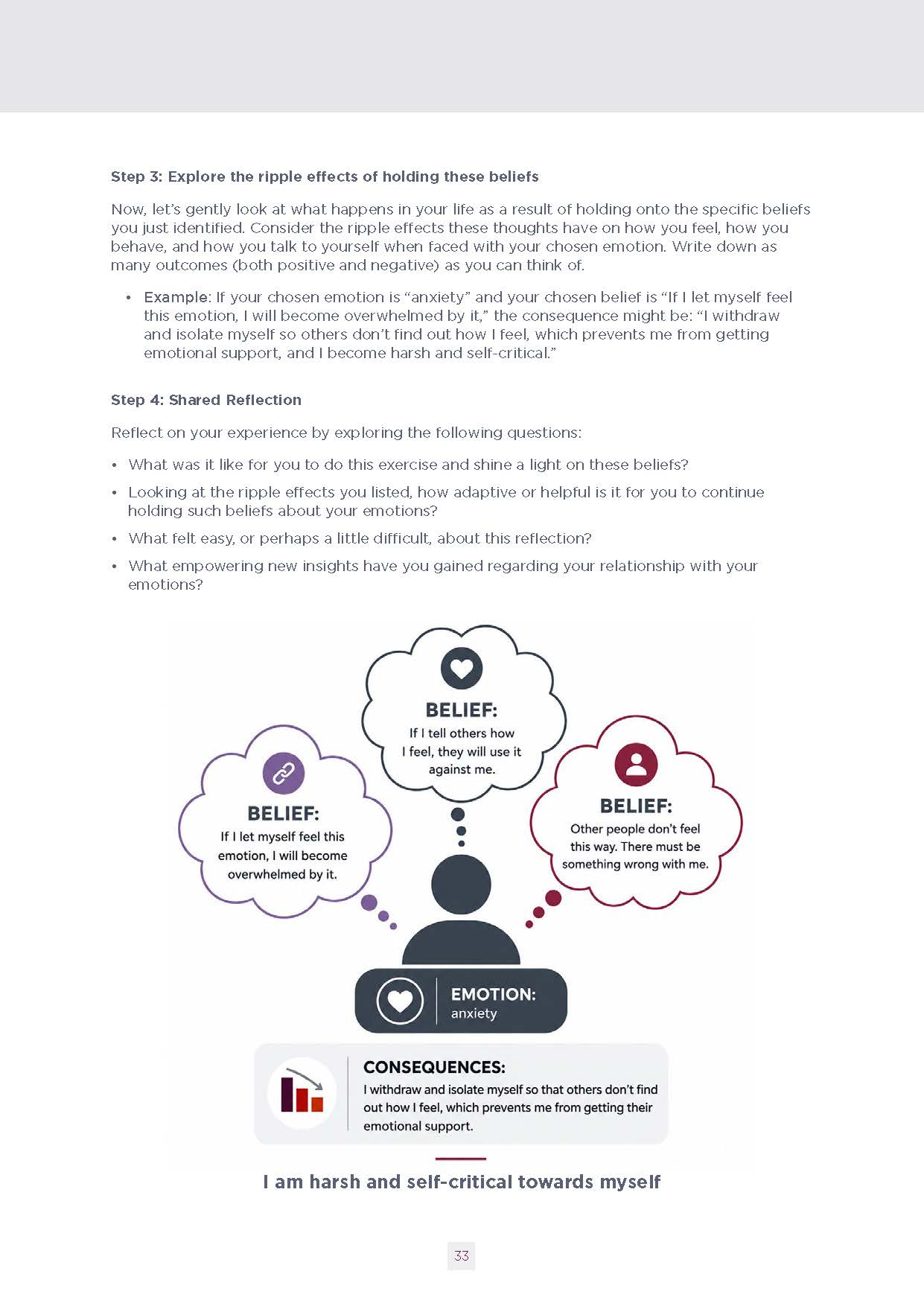
Step 3: Explore the ripple effects of holding these beliefs Consider the ripple effects these thoughts have on how you feel, how you behave, and how you talk to yourself when faced with your chosen emotion.
Break Your Hidden Emotional Rules.
Viewing our emotions as changeable helps us build a much more active, assertive, and resilient approach to life's challenges. By exploring this framework, you will clearly map out the real-world consequences of your limiting thoughts and actively rewrite them. Add this vital exercise to your leadership library right now to replace exhausting emotional avoidance with true, authentic strength.
$7.00